Hop-On Sightseeing Paths — Big Bus Map Guide
How to read the Big Bus map, choose color-coded paths, plan transfers, and build efficient sightseeing loops in New York.
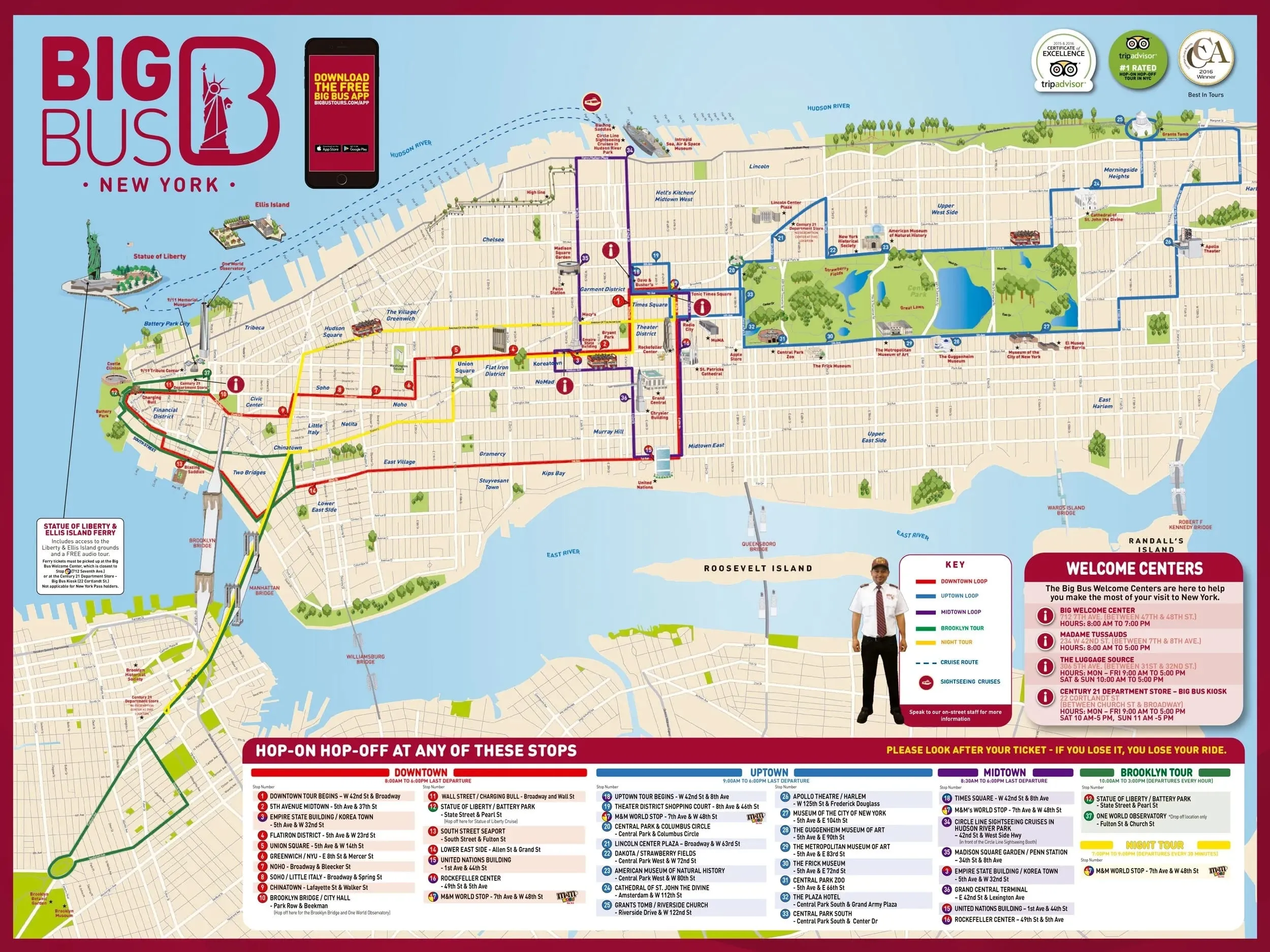
Hop-On Sightseeing Paths — Read the Big Bus Map Like a Local
This post explains how to use the Big Bus map (/newyork-hoho/big_bus_map_00.webp) as your primary planning tool for hop-on hop-off sightseeing in New York: route colors, transfer hubs, sample paths and timing strategies.
At-a-glance: What the Map Shows
- Color-coded routes: each loop (Midtown, Downtown, Brooklyn, Harbor) is a different color — follow colors to avoid wrong buses.
- Interchange points: major hubs where you can switch loops without backtracking.
- Frequency markers: small clock icons indicate higher-frequency segments.
- Boat integration: harbor route and ferry connectors are shown as dashed lines.
How to Read the Map (Step-by-step)
- Identify your accommodation and nearest HoHo stop — mark it on the map.
- Choose the color/loop that includes 2–3 high-priority stops.
- Trace the continuous path of that color to see the loop direction — buses run either clockwise or counterclockwise.
- Locate the nearest interchange point to plan a second loop or borough transfer.
Pro tip: If two desired stops are on different colors but share an interchange, plan to transfer there rather than riding the longer loop.
Key Interchange Hubs (Map Anchors)
- Times Square / Midtown hub — connects Midtown and Uptown segments.
- South Street Seaport / Fulton — Downtown hub with harbor access.
- DUMBO / Brooklyn Bridge Park — Brooklyn–Manhattan connector and great photo staging point.
Sample Sightseeing Paths (Map-driven)
| Path | Colors to Follow | Why it Works |
|---|---|---|
| Classic One-Day Orientation | Midtown (Blue) → Downtown (Red) | Fast overview: theaters, Central Park, 9/11 Memorial |
| Skyline & Waterfront | Downtown (Red) → Harbor (Teal) → Brooklyn (Yellow) | Combines skyline views with DUMBO photos |
| Museum & Park | Midtown (Blue) → Uptown spur (Green) | Museum Mile plus Central Park relaxation |
Example: Golden-Hour Photo Path
- Mid-afternoon: follow Blue (Midtown) to Rockefeller Center.
- Transfer at Midtown hub onto Red (Downtown).
- Hop off in DUMBO 60–90 minutes before sunset for skyline shots.
Timing & Frequency — Use the Map to Estimate Waits
- Treat frequency markers as a guide: high-frequency segments mean shorter waits.
- Allow 15–30 minutes buffer at interchange points during peak season.
Accessibility & Map Notes
- Accessible stops are labeled; plan transfers at hubs with curb access.
- If a pictured stop shows a stair icon, expect a short walk or an alternate accessible stop nearby.
Checklist: Plan a Map-First HoHo Day
- Choose 3–4 must-see stops and highlight them on the map.
- Pick a primary color route to cover the majority of your list.
- Note interchange hub(s) for flexibility.
- Decide whether to add a Harbor cruise (dashed-line connector).
Using the Big Bus map as your first step simplifies decision-making and reduces wasted rides. Want a printable, color-coded PDF of the suggested paths? Reply and I’ll generate it for you.
About the Author

Map Editor
This guide was written to help visitors cut through the city's noise and discover how to use hop‑on hop‑off services to see both the big icons and smaller neighbourhood moments.
Tags
Comments (0)
Loading comments...